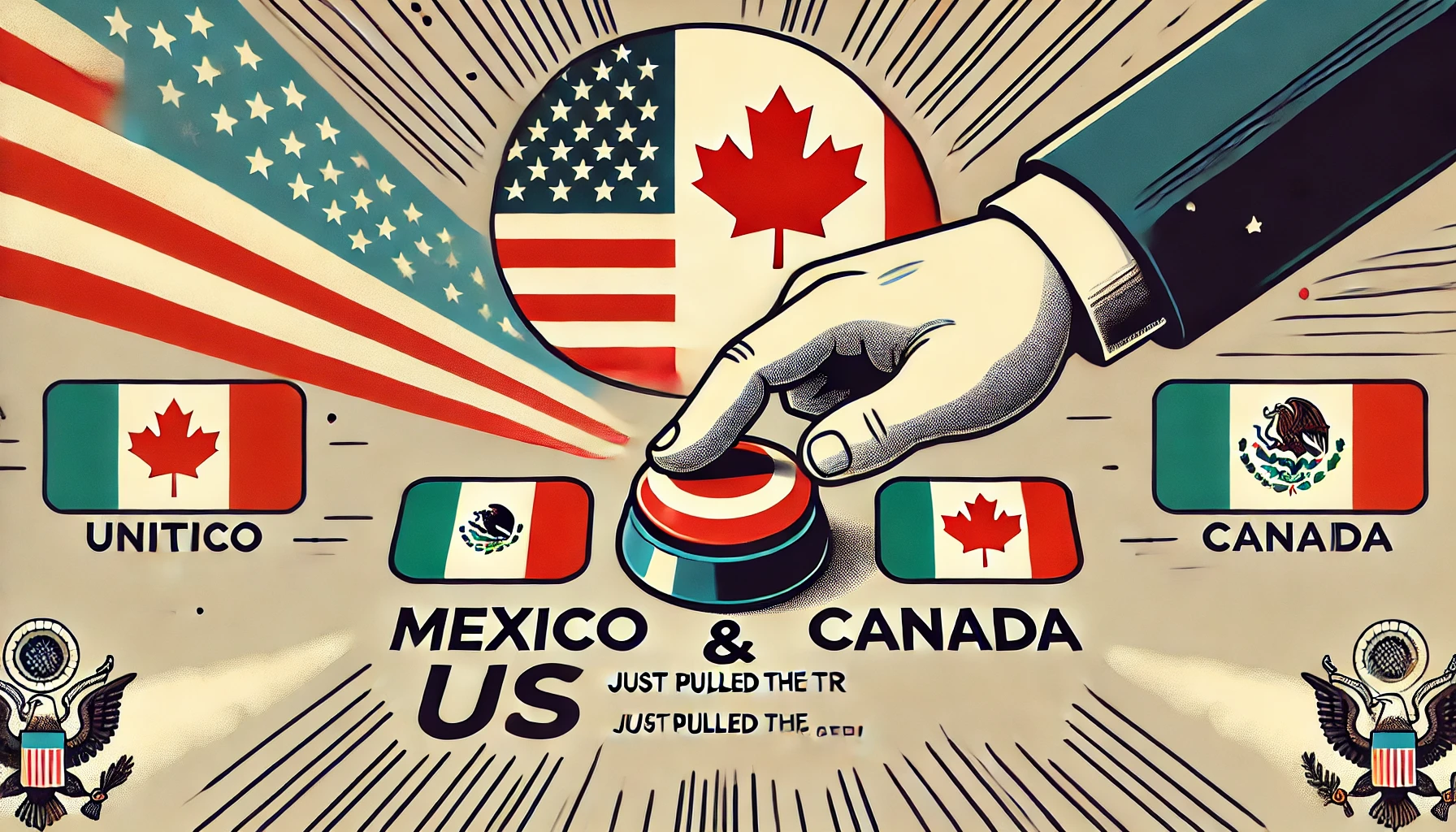
United States: In a firm declaration on Monday, President Donald Trump confirmed that the sweeping tariffs on imports from Canada and Mexico would proceed as initially planned following the expiration of the current month-long suspension next week.
“The tariffs are moving forward, right on schedule,” Trump asserted during a White House press briefing when queried about the reactivation of the postponed tariffs targeting two of America’s most critical trade allies.
The president reiterated his long-standing grievance that the United States has been “taken advantage of” by foreign powers in “virtually every sector,” reinforcing his commitment to implement what he described as “reciprocal tariffs,” as reported by CNBC News.
“Absolutely, the tariffs will go through, and we’re prepared to reclaim considerable leverage,” Trump declared, maintaining his characteristic directness.
On February 1st, Trump issued executive orders imposing a 25 percent tariff on imports from Mexico and Canada, along with a 10% tax on Canadian energy products.
These measures were justified by accusations that Mexico and Canada had fallen short in controlling crime and drug trafficking along their borders with the US. Trump framed the tariffs not only as a bargaining chip but also as a means of enhancing federal revenues.
Yet, within 48 hours of signing the orders, Trump halted the tariffs. This abrupt pause followed assurances from Mexican President Claudia Sheinbaum and Canadian Prime Minister Justin Trudeau, both of whom vowed to intensify their border security efforts, according to CNBC News.
Trump announced the developments via Truth Social on February 3rd, revealing a 30-day suspension of tariffs on Canadian imports while similarly deferring duties on Mexican goods.
During this reprieve, the administration plans to engage in further negotiations with Mexico and aims to solidify a “comprehensive economic agreement with Canada.”
In his unconventional first month in office, Trump also introduced a 10 percent tariff on Chinese imports and set in motion his broader agenda of imposing “reciprocal tariffs” on other trade partners. China’s immediate retaliation—levying targeted tariffs on US goods—intensified fears of a deepening trade war between the two global heavyweights.
Parallel concerns have emerged regarding Mexico and Canada, two of America’s closest allies and key economic partners, as reported by CNBC News.
Before Trump’s decision to delay the tariffs, both Trudeau and Sheinbaum signaled intentions to impose retaliatory duties on American products, heightening the risk of a potential trade standoff.