Credits – Wikimedia Commons
The Trump administration has quietly drafted a legislative proposal to cut nearly all federal funding for public media outlets like NPR and PBS.
United States: In a bold bureaucratic maneuver, the Trump administration has composed a confidential legislative communiqué that signals an impending cessation of nearly all federal subsidies allotted to public media entities—namely NPR and PBS—per disclosures from a White House insider who conferred with NPR under anonymity.
The document, set to be dispatched to Congress upon its return from legislative hiatus on April 28, will activate a 45-day deliberative interval wherein both chambers must either ratify the proposed rescission or tacitly reinstate the funding by inaction.
Though the White House refrained from directly referencing the draft in a Monday statement, it nonetheless lambasted public media institutions: “For too long, the American taxpayer has underwritten organizations like NPR and PBS, purveyors of insidious, radical ideologies masquerading as journalism.” The administration further decried what it deemed an “onslaught of ideological trash parading as ‘news’” and castigated the outlets’ alleged intolerance of viewpoints outside the progressive orthodoxy, according to npr.org.
NPR, renowned for its venerated news franchises Morning Edition and All Things Considered, and PBS, synonymous with PBS NewsHour and culturally foundational children’s programs like Daniel Tiger’s Neighborhood, are at the epicenter of this fiscal blitz.
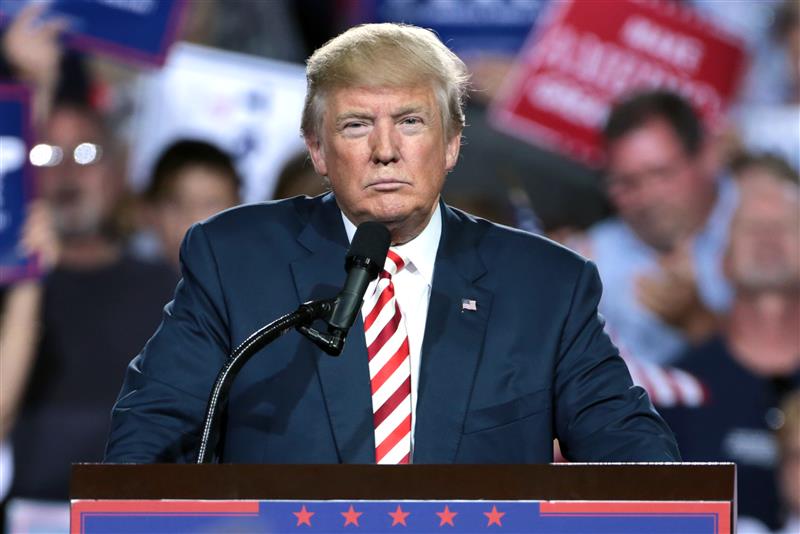
Earlier this month, Trump unleashed a digital tirade via social media, declaring in typographical crescendo, “REPUBLICANS MUST DEFUND AND TOTALLY DISASSOCIATE THEMSELVES FROM NPR & PBS, THE RADICAL LEFT ‘MONSTERS’ THAT SO BADLY HURT OUR COUNTRY!”
The executive blueprint reportedly seeks to rescind a sweeping $1.1 billion—equivalent to two fiscal cycles—for the Corporation for Public Broadcasting (CPB), a federally chartered, nominally independent nonprofit that partially finances NPR and PBS.
This initiative appears to draw momentum from a March House Oversight subcommittee hearing, wherein top brass from NPR and PBS were summoned to address accusations of partisan slant and ideological favoritism in their reportage.
Responding to the potential financial gutting, NPR issued a warning: “Extinguishing CPB’s funding would deal a catastrophic blow to countless communities nationwide who depend on public radio for trustworthy reportage, cultural content, emergency communication, and civic safety.” It reiterated its public service ethos: “It’s not merely in our moniker—it’s our mandate,” as per npr.org.
Echoing this sentiment, Paula Kerger, PBS President and CEO, cautioned that the proposed defunding “threatens the continuity of PBS’s indispensable service to the citizenry,” underscoring the role bipartisan congressional support has historically played in enabling PBS’s mission to educate, inspire, and uplift.
Charges of Political Bias Spark Intense Scrutiny
During the aforementioned subcommittee session, network leaders defended their impartiality, characterizing their output as nonpartisan and freely accessible to all Americans. Yet, Republican legislators aired grievances regarding what they perceive as a systemic left-leaning slant.
“You’re free to hate conservatives—but not on our dime,” snarled Rep. Marjorie Taylor Greene, who helms the subcommittee. Chair James Comer of the House Oversight Committee also took umbrage with NPR’s coverage of his personal financial dealings, labeling it as biased and vindictive, as per npr.org.
Republicans also assailed NPR CEO Katherine Maher for political sentiments she had posted on social platforms long before her ascension to leadership in March 2024. Similarly, PBS’s Kerger faced pointed inquiries regarding a video clip featuring a drag artist adapting a children’s song—content she clarified had never been broadcast but was housed on the digital portal of PBS’s New York affiliate.
Despite the political upheaval, PBS and NPR stations remain deeply entrenched in localities, penetrating over 99% of the American populace with programming that is freely accessible. Many serve as linchpins in regional emergency response systems.
Currently, CPB’s annual budget stands at $535 million, an allotment recently reaffirmed through a provisional measure passed by the GOP-led Congress. The organization’s funding cycle spans two years—a safeguard engineered to buffer it against transient political headwinds. As it stands, appropriations have been secured through September 30, 2027.
Financial Framework of Public Broadcasting
NPR directly acquires a mere sliver—approximately 1%—of its budget from federal allocations. Its member stations, numbering 1,300 and operating under 246 parent organizations, receive roughly 8%–10% of their funding via CPB, which they, in turn, funnel to NPR for syndicated programming. PBS and its affiliates derive about 15% of their fiscal sustenance from CPB resources, according to npr.org.
CPB disbursements predominantly benefit local broadcasters—particularly television, whose operational costs vastly outpace those of radio. Network executives warned that eliminating this pipeline of public capital would annihilate small-scale rural stations and destabilize the broader media ecosystem.
Testifying before Congress, Ed Ulman, CEO of Alaska Public Media, emphasized the existential necessity of CPB funding: “Absent NPR and PBS, Alaskans would vanish from the national narrative—our voices, our stories, our truths would be unheard.” He argued that such funding ensures regional stories traverse state lines and enter the national consciousness.
A Pew Research Center poll found that 43% of U.S. adults favor the continuation of federal backing for public broadcasters, while 24% advocate for termination. When dissected along partisan lines, the divide grows starker: 44% of Republicans endorse withdrawal, whereas 69% of Democrats back its retention.
Media Warfare Escalates: Federal Investigations, Legal Skirmishes, Institutional Seizures
Despite decades of trans-partisan backing, the Trump administration has initiated a new front in its long-running battle with public and international media. Brendan Carr, Trump’s FCC appointee, has spearheaded an inquiry into whether NPR and PBS underwriting segments violate legal prohibitions against commercial advertising.
While both networks assert they’ve scrupulously adhered to FCC parameters—at the agency’s own urging—they now face intensified scrutiny. Other government-supported journalistic bodies have also come under siege, as reported by npr.org.
In New York, a federal judge has momentarily blocked presidential advisor Kari Lake’s attempt to shutter Voice of America. In Washington, another judge ruled that funding earmarked for Radio Free Europe/Radio Liberty must continue to flow, per Congressional directive.
These court battles contend that Trump has dramatically overstepped his executive bounds—usurping legislative authority, trampling due process, and endangering First Amendment liberties.
Nevertheless, the administration has succeeded in dramatic fashion. Agents of Trump’s budget-paring DOGE initiative—backed by federal law enforcement—forcefully entered the US Institute of Peace (USIP), a Congressional nonprofit, in an apparent bid to commandeer the facility. Terminated USIP employees are now litigating against the White House.
Department of Justice lawyer Brian Hudak has disclosed plans to repurpose USIP’s premises for the Department of Labor, a scheme the judiciary has thus far declined to halt—though the presiding judge decried the administration’s actions as emblematic of a “bull in a China shop,” as per npr.org.
Meanwhile, Lake, now overseeing the dismantling of other federally sponsored international broadcasters, echoed Trump’s combative posture: “Defund ALL Fake News and Turn them Off,” she proclaimed, citing the March hearing as further justification for her crusade.