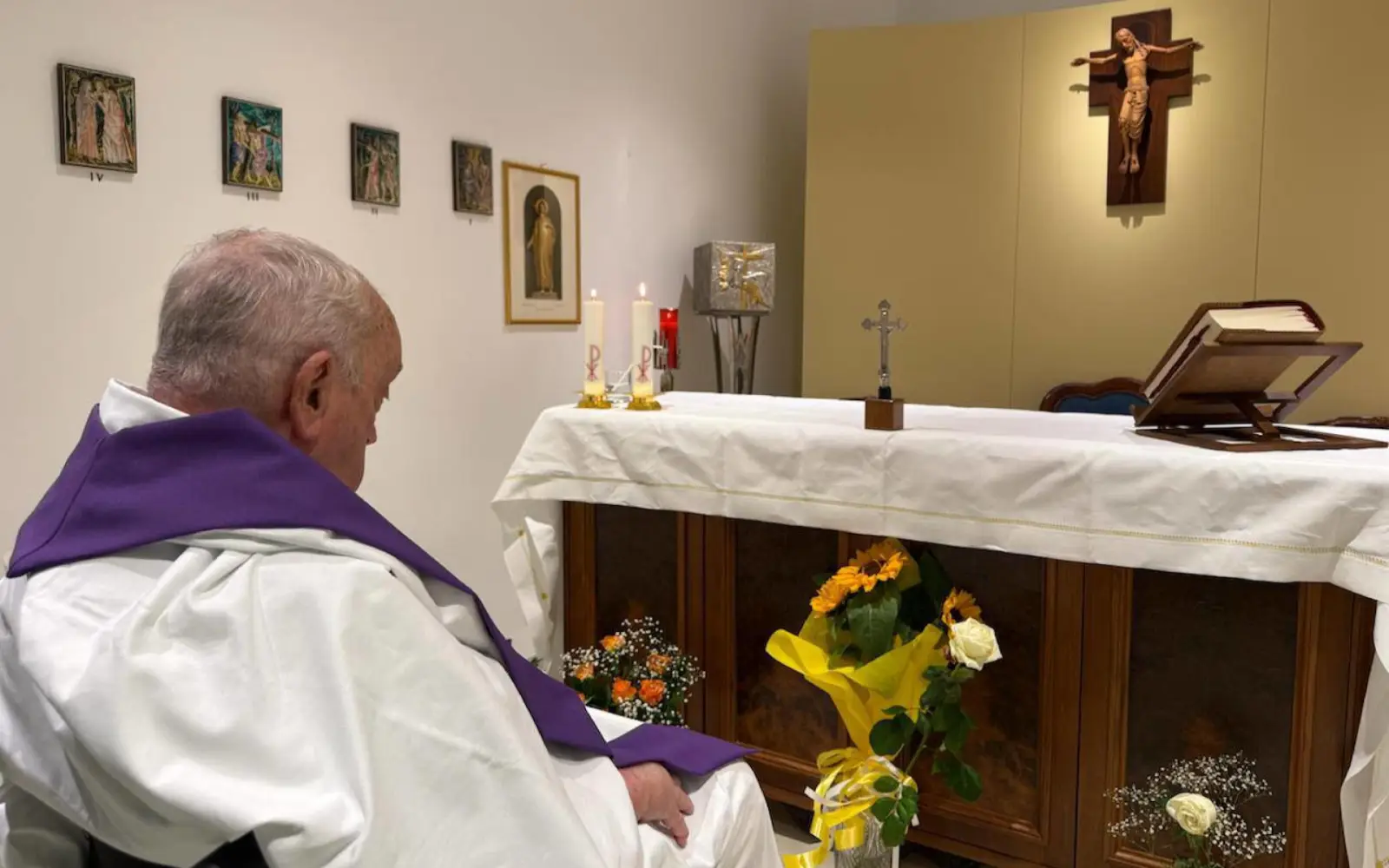
Pope Francis, the 266th leader of the Roman Catholic Church, has died at age 88, the Vatican confirmed on Monday morning. His death was announced by Cardinal Kevin Farrell from the chapel of Domus Santa Marta, the Pope’s residence, stating, “At 7:35 this morning, the Bishop of Rome, Francis, returned to the house of the Father. His entire life was dedicated to the service of the Lord and of His Church.”
Francis had recently been hospitalized with severe pneumonia but made a final public appearance on Easter Sunday, blessing thousands in St. Peter’s Square from the popemobile — a poignant farewell many didn’t realize at the time would be his last.
President Trump Orders Flags to Half-Staff
Speaking at the White House Easter Egg Roll, former President Donald Trump reacted to the news of the Pope’s passing. He announced that he had signed an executive order for all federal and state flags to be flown at half-staff in honor of Pope Francis.
“He was a good man, and he worked hard. He loved the world, and it’s an honor to do that,” Trump said. When asked if he would attend the funeral, Trump said it would depend on the timing. “He especially cared for those struggling, and that’s something I respect.”
What Happens After the Death of a Pope?
Following the Pope’s death, the Vatican activates centuries-old procedures detailed in a document called Universi Dominici Gregis, which governs the process after a pope passes away.
Cardinal Kevin Farrell, the camerlengo — a Vatican official responsible for managing church affairs during this period — will temporarily oversee matters until a new pope is elected. Heads of Vatican departments will automatically step down from their roles and may only resume or be reappointed after a new pope takes office.
Cardinals from across the globe will begin arriving in Rome to attend general congregations — daily meetings where they discuss what qualities they seek in the next pope. Only cardinals under 80 years of age are allowed to vote in the conclave, which is held in the Sistine Chapel.
The Conclave Process
Roughly 120 voting cardinals will participate in the papal conclave, where ballots are cast in secrecy. On the first day, they vote once. Afterward, they vote twice per day until a two-thirds majority is reached for one candidate.
Once a pope is elected, he is asked if he accepts the role and which name he will choose. If he declines, voting resumes. The decision is made public through the traditional white smoke rising from the chapel chimney — a global signal that the Church has a new leader.
A Different Kind of Funeral for Francis
Pope Francis requested a simpler and more humble farewell than many of his predecessors. While his funeral Mass will still take place in St. Peter’s Square, he will not lie in state on a raised platform inside the basilica for public viewing.
Instead of being interred in the grand crypts of St. Peter’s Basilica, Francis asked to be buried in Rome’s Basilica of St. Mary Major — near the Salus Populi Romani, his favorite Marian icon. He also requested a plain wooden coffin, breaking with the long-standing tradition of three nested caskets.
After the funeral, the Vatican will observe nine days of official mourning — known as the novemdiales — before the conclave to select the next pope begins.