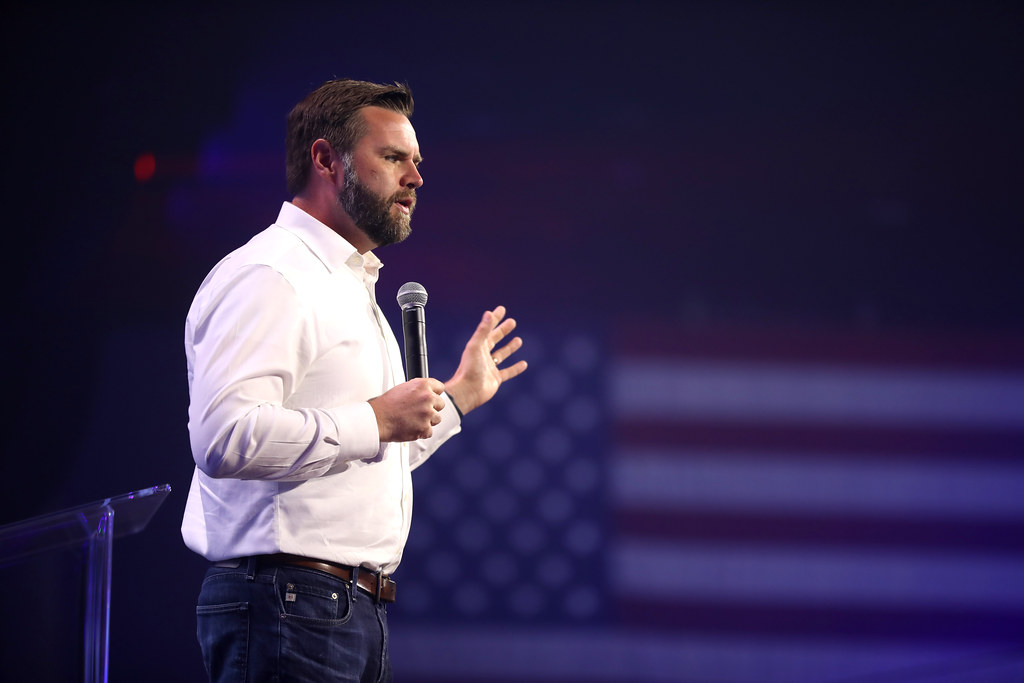
United States: In a stark departure from historic US diplomacy, Vice President Vance pronounced the flaring confrontation between India and Pakistan as “unequivocally not our concern,” even as cross-border hostilities surged, featuring drones and projectiles that rained over territories untouched by such conflict for decades.
During a segment aired late Thursday on Fox News, Vance was asked whether the Trump administration harbored anxiety over a potential nuclear conflagration. He responded bluntly: “We hope the temperature drops soon,” underscoring, “We don’t possess the reins to steer these nations.”
He continued, “We might attempt nudging them toward calm, but entangling ourselves in a conflict that has no bearing on American control — it’s not a route we’ll pursue.”
Vance affirmed that diplomatic backchannels were being utilized to discourage escalation, downplaying fears of imminent nuclear warfare. Meanwhile, Secretary of State Marco Rubio disclosed that he had initiated dialogue with key officials — India’s foreign minister and Pakistan’s prime minister — earlier that day, according to NPR.
Praveen Donthi, a strategist at the International Crisis Group, interpreted Vance’s hands-off commentary as potentially inflaming the conflict. “The situation is vaulting over fresh thresholds daily, and no one knows when the descent begins,” he warned.
Arifa Noor, a columnist for Dawn, observed that Vance’s rhetoric echoed a retreat from past US interventionist tendencies. “In 1999 and 2019, Washington was actively tempering hostilities,” she noted. “Now, there’s an eerie vacuum — no alternative global arbiter seems poised to fill it.” She painted a grim portrait, “Two nuclear-armed adversaries locked in volatility, without an external brake.”
Noor also highlighted Pakistan’s recurring appeal for global mediation, stemming from its perception as the militarily disadvantaged party in its long-standing standoff with India, especially over Kashmir. This contested Himalayan terrain, bisected yet wholly claimed by both, has long served as the powder keg of their antagonism.
The newest bout of violence was triggered in late April after 26 people — largely Hindu tourists — were gunned down in Indian-administered Kashmir. India alleged the attackers were puppets of the Pakistani military. Islamabad categorically rejected such claims.
Come Wednesday night, India retaliated with missile strikes deep inside Pakistani territory. Pakistan responded by claiming to have taken down five Indian jets. In the days since, both nations have volleyed aerial drones and rocket fire across the boundary.
Donthi noted that Vance’s tone hinted at US alignment with India’s posture, suggesting a passive US stance may be inadvertently bolstering India’s aim to confront what it deems as terrorism rooted across the border.
On Friday, multiple munitions reportedly struck near a military zone in Pakistan’s Okara city. Residents caught the chaos on camera — missiles twirling to earth, trailing smoke, while young men scattered. Two local witnesses confirmed the strike to NPR, requesting anonymity for fear of reprisal from Pakistani authorities, who remain silent on the matter, as per NPR.
Meanwhile, an Indian military official shared that Indian drones targeted four Pakistani sites in response to what she labeled as an “aggression” — referencing Pakistani drone incursions into Indian territory overnight. These included a 760-mile frontier from Rajasthan’s deserts to the peaks of Jammu and Kashmir, regions untouched by active fire for generations.
“There were streaks of flames tearing through the heavens,” said 43-year-old Gowher Ahmad from Jammu. Friday morning brought quiet, but he confessed unease over what nightfall might bring.
Jaspreet Kaur, hailing from Ajote near the border, said most of the village’s 10,000 souls had escaped. “The rest of us are holed up in a building’s basement,” she said. From nearby Khari, Karamat Hussain added that not everyone could flee — especially families burdened with livestock, like his elderly parents.
As the exchange of fire continued, India ramped up its crackdown on dissent. Mirwaiz Umar Farooq, a respected Kashmiri cleric and separatist voice, revealed via X that Indian authorities barred him from attending communal Friday prayers. Sharing a previous sermon clip, he urged both nations: “Step away from this catastrophic path. It leads only to ruin,” according to reports by NPR.
Social platform X reported that Indian officials ordered the removal of over 8,000 accounts, including media outlets. Targets allegedly ranged from celebrated journalist Anuradha Bhasin to the independent Delhi-based news portal The Wire. The Indian government has not addressed queries on the matter.