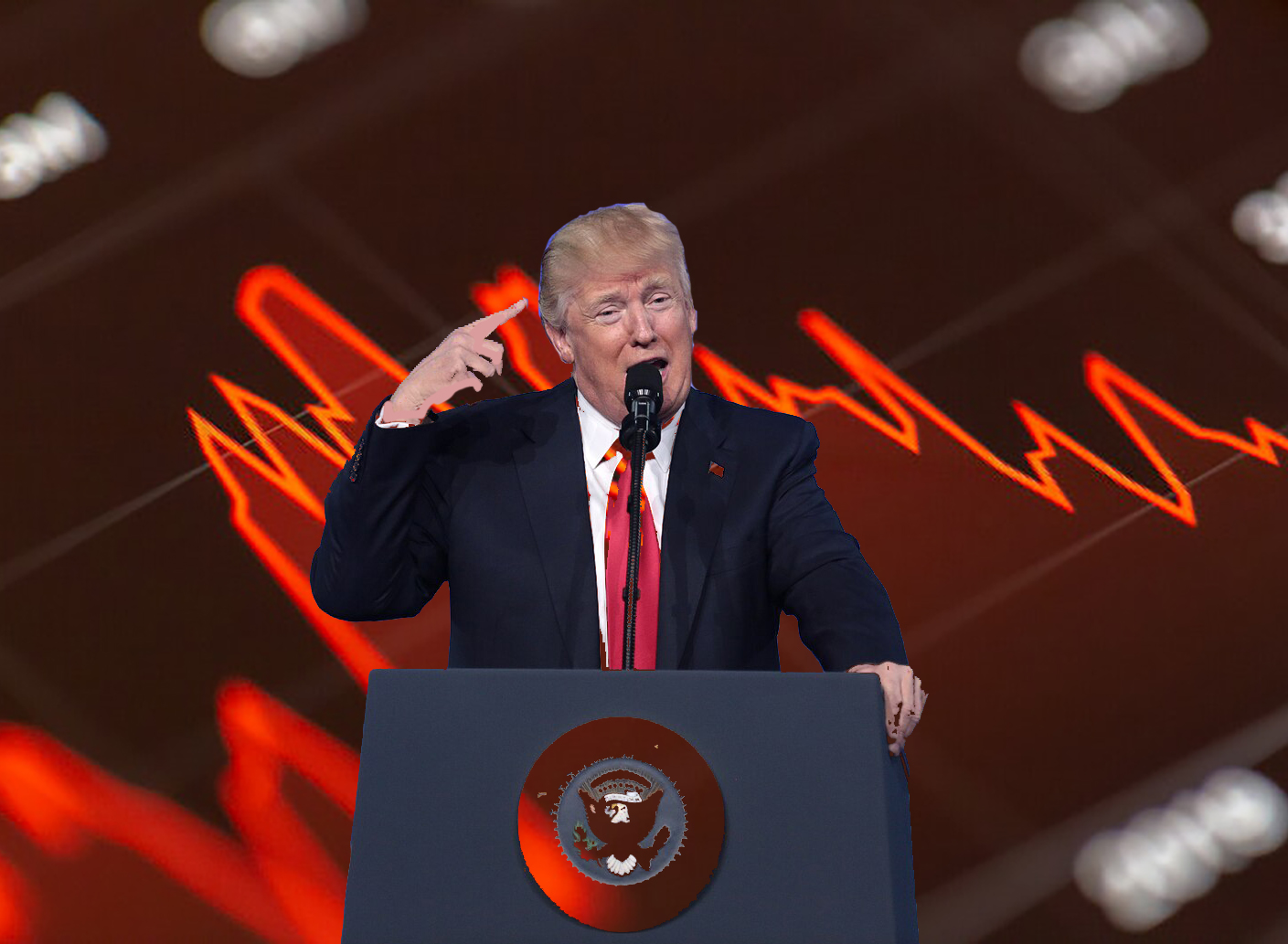
United States: President Donald Trump is resolutely driving a towering legislative vision — his grandiose “big, beautiful” blend of tax breaks and budgetary scalpel work — with a deadline to ink it into law by Independence Day. The Senate, methodical and plodding, now finds itself urged into overdrive.
Earlier this week, Trump huddled with Senate Majority Leader John Thune at the White House. Meanwhile, he’s personally calling senators, mixing persuasion with pressure, as he attempts to prod them toward urgency. Yet, despite his push, the sprawling 1,000-plus-page proposal faces a tortuous trek through the upper chamber.
“He asked me point-blank — ‘What’s your read on the Senate?’” said Sen. Josh Hawley of Missouri. “Are we going to hit a wall?”
In the coming three weeks, senators brace for a stormy sprint as they tweak and tug at the immense Republican blueprint, which narrowly squeaked through the House. Behind closed doors, they’re laboring to refashion the bill before a high-stakes vote that could mirror the House’s razor-thin margin, according to AP News.
On social media, Trump thundered, “Passing THE ONE, BIG, BEAUTIFUL BILL is a Historic Opportunity to turn our Country around.” His message to lawmakers: work at breakneck speed and land it on his desk by the Fourth of July.
With only a sliver of leeway in the GOP’s 53-seat Senate majority, Thune and House Speaker Mike Johnson are counting votes like hawks. Democrats, meanwhile, are launching unrelenting attacks on Republican efforts to slash Medicaid, food aid, and green energy funds to bankroll over $4.5 trillion in tax reductions. Many GOP lawmakers are weathering intense backlash at tumultuous town halls in their home states.
“We’d love universal support,” Thune said. “But everyone’s drawing lines. Still, we must succeed. Falling short? Not an option. We need 51 votes. We’ll find the route.”
At the core, the bill aims to cement Trump’s 2017 tax cuts and layer on fresh cuts he campaigned for — like zero taxes on tips. It also carves out a massive $350 billion investment in border fortification, deportation initiatives, and national defense.
To offset the vanished tax revenues and avoid ballooning the already monstrous $36 trillion debt, Republicans want to slice federal expenditures by tying certain welfare benefits to employment mandates. This could evict around 8.6 million Americans from healthcare coverage and trim food aid (SNAP) for nearly 4 million people.
Additionally, the legislation hoists the debt ceiling by $4 trillion, granting the government room to borrow and settle its bills.
Democratic Senate Leader Chuck Schumer condemned the plan as “hideous at its marrow.”
He argued that assurances claiming Americans won’t be harmed are deceitful: “Beneath the fog lies a harsh truth: enormous giveaways to the ultra-rich, paid for by wrecking healthcare for millions.”
The Congressional Budget Office is preparing to unveil its economic appraisal of the plan, particularly its impact on the federal deficit. But Republicans are already poised to dismiss the analysis as flawed arithmetic.
On Tuesday, Trump escalated his tone, turning his fire on Republican holdouts.
He targeted Kentucky’s Sen. Rand Paul — a steadfast opponent of federal largesse — for insisting that the debt ceiling hike be scrapped from the legislation.
“Rand says NO to everything but never contributes anything helpful. His ideas are pure lunacy,” Trump lashed out online, as per AP News.
For Trump, the July 4 deadline isn’t just symbolic — it’s essential. Treasury Secretary Scott Bessent has warned that by mid-July or early August, the government’s coffers will be depleted if the debt ceiling remains unlifted. Bessent is also conferring in private with senators and GOP brass.
Thune echoed the urgency: “It’s non-negotiable. We must raise the ceiling.”
The legislative road ahead doubles as a proving ground for Thune, who, like Johnson, is still solidifying his leadership footing under Trump’s return.
Johnson has cautioned against major rewrites, but Thune is balancing pressure from senators clamoring for revisions.
To safeguard the long-term viability of business tax cuts — a top Senate goal — lawmakers might pare back some of Trump’s fresh tax proposals, like those targeting car loans or overtime pay.
Another contentious point: the House’s proposed $40,000 cap on SALT deductions (state and local taxes), a flashpoint for lawmakers from high-tax states like New York and California.
“All of that’s on the table,” said Sen. Thom Tillis of North Carolina.
Meanwhile, a coalition of senators, including Josh Hawley, Susan Collins of Maine, and Lisa Murkowski of Alaska, is uneasy over Medicaid tweaks that could jeopardize coverage.
The House version also introduces a possible $35 copay for Medicaid services and eliminates a provider tax crucial to rural hospital funding — both raising eyebrows.
“The simplest way to avoid accusations of gutting Medicaid,” Hawley mused, “is to leave Medicaid alone,” according to reports by AP News.
Collins, carefully scrutinizing the text, has yet to commit.
A separate clause allowing the auctioning of radio spectrum — a prized federal asset — has also triggered friction among certain senators.